Mould Problems in NZ Homes: Causes, Warning Signs, Removal and Costs
Mould is one of the most visible signs that moisture is not being managed properly in a New Zealand home. It may begin as scattered dark spots on a bathroom ceiling, a musty smell behind a wardrobe or discolouration around a window. Sometimes cleaning removes the visible growth and the problem does not return. In other homes, mould repeatedly reappears because a cold surface, a leaking building component or persistently damp material remains untreated.
The practical challenge is to distinguish a manageable surface problem from evidence of a deeper building defect. Mould can grow on dust, paint, timber, fabric, plasterboard and other materials when sufficient moisture is available. Its colour alone does not establish what species is present, whether occupants have been harmed or whether expensive removal is required.
New Zealand homes differ in age, construction, heating, insulation and exposure. Single-glazed bedrooms can develop surface mould when warm indoor air meets cold corners. A leaking window junction may wet plasterboard from behind. A poorly ventilated bathroom may stay humid after each shower. A house that has flooded may contain damp insulation and contaminated materials hidden from sight. Those circumstances call for different investigations and repair methods.
This guide explains how mould develops, which warning signs matter, when ordinary cleaning is appropriate, when professional remediation should be considered, and what costs and legal obligations New Zealand homeowners should understand. Its purpose is to help you address the moisture source and the affected materials without paying for unnecessary products or overlooking significant damage.
Safety first: Avoid disturbing extensive mould growth, visibly deteriorated wall or ceiling linings, sewage-contaminated materials or suspected asbestos-containing products. Do not dry-brush large patches, use an ordinary vacuum to collect mould, or mix bleach with ammonia, acids or other cleaning products. People with asthma, significant allergies or weakened immunity should avoid mould-cleaning work and seek appropriate health advice. If water is affecting electrical fittings or a structure appears unsafe, restrict access and obtain professional assistance.
1. Understanding the Problem
Mould is a group of fungi that grows when environmental conditions provide moisture, nutrients and suitable temperatures. Microscopic spores are normally present in outdoor and indoor air. Finding spores is therefore not the same as finding damaging fungal growth in building materials.
What mould needs to grow
Many household surfaces contain enough material for mould to use as food. Dust on a painted wall, paper facing on plasterboard, timber, fabric and some adhesives can all support growth. Moisture is usually the factor that determines whether a small quantity of spores develops into visible colonies. Poor ventilation, cold surfaces and leaks can sustain the conditions long enough for growth to expand.
Surface mould versus mould within materials
Growth on an intact hard, non-porous surface is often easier to remove than growth embedded in absorbent material. Glass and glazed tiles can generally be cleaned without dismantling surrounding construction. Paper-faced plasterboard, carpet underlay, insulation and some fabrics can retain contamination or moisture within their structure.
Where water has repeatedly entered a wall or ceiling cavity, the visible patch may represent only one part of the affected area. Removing or painting over the surface growth does not determine whether hidden linings or framing remain wet. Invasive investigation needs an appropriate plan because opening contaminated materials can release dust and spores.
Mould, mildew, staining and timber decay
‘Mildew’ is often used informally for superficial fungal growth, while ‘mould’ covers a broad range of fungi. A black mark may also be soot, ingrained dirt, staining from a historic leak or a damaged coating. Conversely, fungal decay that affects structural timber is a different building-performance issue from surface mould on a bathroom wall.
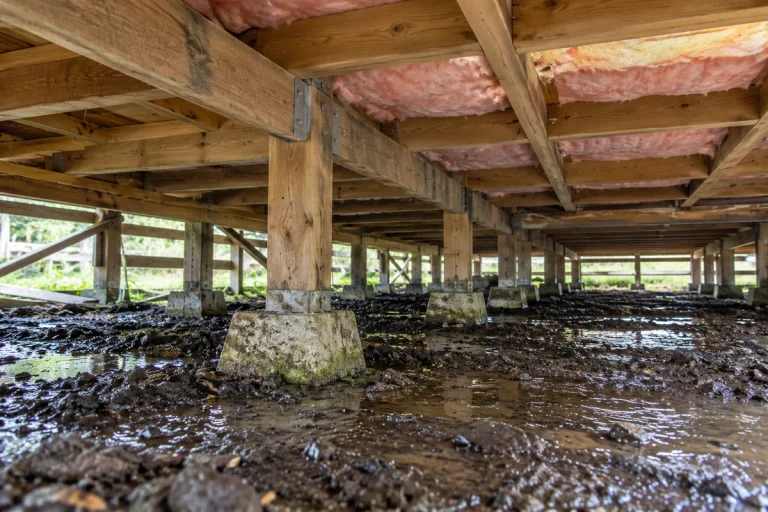
Where timber has become soft or lost strength, a building professional must assess its structural role. A household mould-cleaner cannot restore the capacity of a deteriorated bearer or joist. For ground-related wetting beneath suspended floors, see our Subfloor Dampness guide.
Health considerations without alarmist assumptions
Exposure to damp and mouldy environments is associated with respiratory symptoms, allergies and aggravation of asthma. Sensitivity differs from person to person; children, older people and people with asthma or weakened immune systems can warrant particular care. A medical practitioner is the appropriate person to assess individual symptoms.
There is no reliable basis for assuming that every visible dark patch is a particular ‘toxic black mould’. Colour cannot identify a species. Equally, a reassuring laboratory result does not make a persistently wet building acceptable. The essential building objective is to reduce harmful moisture and remove contaminated material appropriately. MBIE’s mould guidance explains the health and building considerations in more detail.
2. Recognising the Signs and Symptoms
Mould does not always present as an obvious large black patch. It may appear gradually and in places occupants rarely inspect. Its position, extent, texture and relationship with moisture are more useful than colour by itself.
Visible spots and discolouration
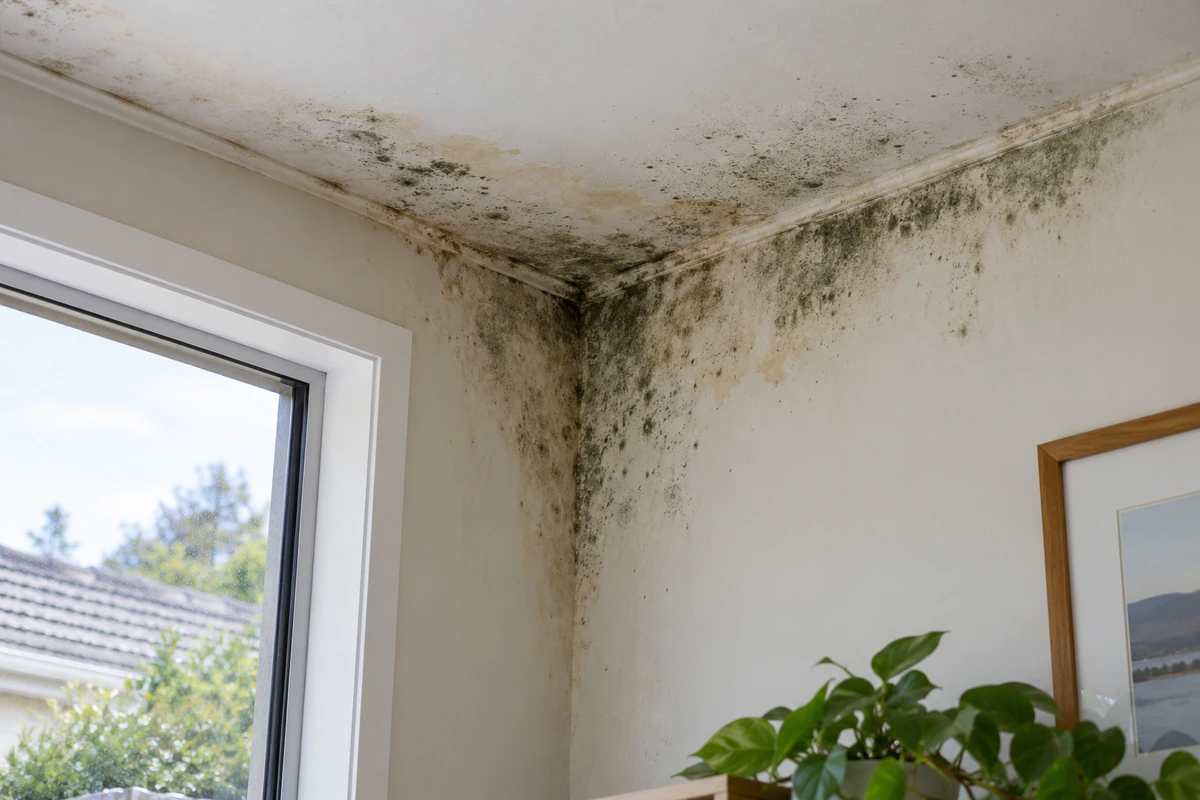
Common appearances include fine dark speckles on painted surfaces, irregular green or grey patches on sealants, discolouration around window reveals and blotches on timber or fabric. Growth may be powdery, velvety or irregular in appearance. None of those visual descriptions reliably establishes its species or whether the underlying substrate is damaged.
Bathroom ceilings, poorly ventilated wardrobes and external corners deserve attention because they can remain cooler or damper than surrounding surfaces. Growth beside a particular pipe or flashing may instead indicate a local water defect. Document where it is occurring before deciding what has caused it.
Musty odours without a visible patch
An earthy or stale smell in a wardrobe, spare bedroom or closed-up room may suggest damp materials or fungal growth outside the immediate line of sight. Odour is not a definitive mould test, however. Damp carpet, underfloor materials and other contaminants can produce similar smells.
Try to establish whether the smell is strongest near a specific wall, plumbing fixture, floor area or after rainfall. Do not remove wall linings merely to chase an odour. A targeted building inspection can identify whether moisture is present and whether further investigation is warranted.
Mould on curtains, furnishings and stored belongings
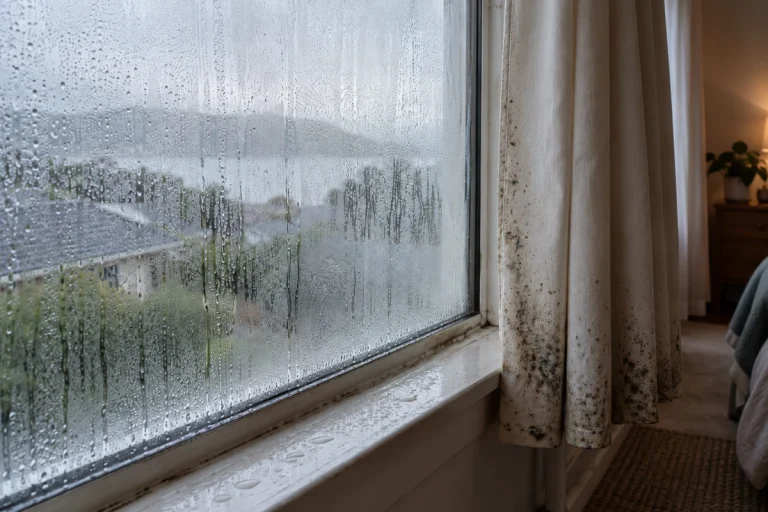
Fabric held against a cold, wet window can remain damp for long periods. Dark marks may develop on curtain hems and linings, upholstery, cardboard boxes and the backs of furniture. This can occur even where the adjacent wall is serviceable but lacks sufficient air circulation.
Lightly affected washable material may be recoverable after suitable cleaning and complete drying. Material that is heavily contaminated, fragile, repeatedly wet or unable to be cleaned thoroughly may need replacement. Avoid shaking or dry-brushing mouldy fabrics inside occupied rooms.
Peeling paint, swelling and soft materials
Bubbling paint, swollen skirtings, stained wallpaper, crumbling plasterboard and recurrent patches after repainting indicate that an underlying moisture problem deserves assessment. These signs may accompany mould, but they also occur after leaks without visible growth. A soft wall lining could conceal damage deeper in the assembly.
When moisture follows wind-driven rain, window junctions or external walls, our Window & Door Leaks guide and Damp Walls & Cladding guide address the relevant water-entry investigations.
Recognising a useful symptom pattern
| What the homeowner notices | Useful initial question |
|---|---|
| Speckles repeatedly return above the shower | Is extraction removing vapour outdoors effectively? |
| Growth behind a wardrobe against an outside wall | Is a cold surface being isolated from room airflow? |
| Mould and soft plasterboard after rain | Is external water entering or trapped in the wall? |
| Affected carpet following a flood | Are underlay and concealed materials still wet or contaminated? |
| Dampness and mould close to a leaking pipe | Has the plumbing defect been identified and repaired? |
| Mustiness beneath a timber floor | Are ground moisture or drainage defects involved? |
The table is a guide to deciding where to investigate, not a diagnostic substitute for professional assessment.
3. Understanding the Possible Causes
Mould is the result of a moisture condition, not an explanation of that condition. The principal task is to identify why a material stays sufficiently damp and whether the moisture originates inside or outside the building.
Repeated condensation on cold surfaces
Indoor air contains water vapour from people and household activities. When vapour reaches a sufficiently cold surface, moisture can collect as condensation. Paint films, corners, joinery, window reveals and furniture backs may consequently stay damp even when no pipe or roof component leaks.
Our Condensation in NZ Homes guide explains dew point, glazing performance and indoor humidity in greater detail. For mould assessment, the important question is whether condensation repeatedly wets the affected material and what is preventing it from drying.
Inadequate wet-area extraction
Bathrooms and kitchens produce substantial short-duration moisture loads. A fan that runs but vents into the roof space, has a crushed duct or lacks adequate airflow may leave the room humid. A recirculating rangehood may filter grease and odour without discharging cooking moisture outdoors.
When humidity spreads into colder bedrooms or corridors, the mould may develop some distance from the original source. This is one reason cleaning a bedroom wall without checking bathroom extraction may lead to recurring growth.
Heating, insulation and thermal bridges
Cold building surfaces increase the likelihood that moisture will accumulate. Poorly insulated ceiling edges, uninsulated walls, metal frames and certain structural junctions can remain colder than the surrounding room. Furniture placed tightly against an outside wall can reduce local air movement and allow the surface to stay damp.
Roof and ceiling leaks
Water entering through roofing, flashings or roof penetrations can wet insulation and ceiling linings and eventually support mould. Leaks may occur only during certain wind directions or rainfall intensities; visible staining can develop away from the actual entry point. Where water is appearing above ceiling linings, consult our Roof Leaks and Ceiling Leaks guides for the source-specific investigation.
Wall and window weatherproofing defects
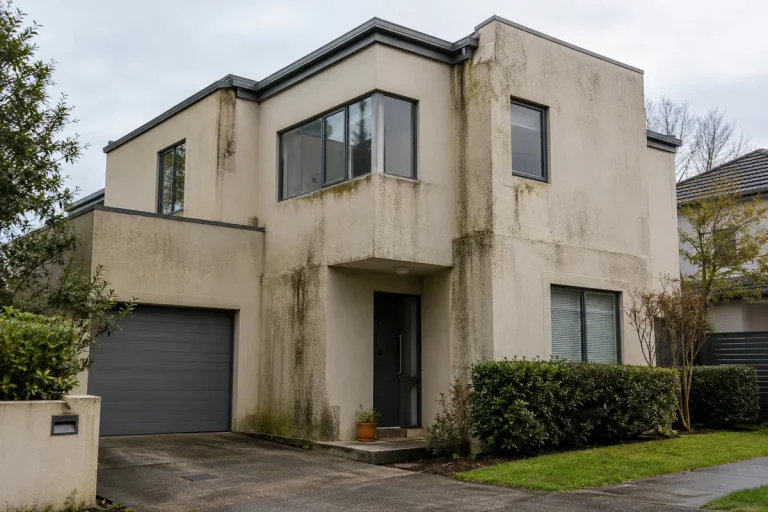
Defective cladding junctions, flashings, window sills and penetrations can allow rainwater into concealed framing. In some homes, the internal surface remains relatively normal while materials behind it become wet. Repeated mould in a small section after storms may therefore require a weathertightness investigation rather than an additional fan.
This is particularly significant where paper-faced linings are affected, where previous patch repairs have failed or where evidence suggests deterioration inside the wall cavity.
Plumbing and wet-area leaks
Leaking shower trays, waste connections, supply pipes and bathroom waterproofing can wet material behind tiles or beneath flooring. These may operate intermittently, only when a fixture is used, or continuously where a pressurised pipe fails. The repair should follow the specific defect; replacing mouldy paint alone is not enough.
Ground moisture, drainage and floodwater
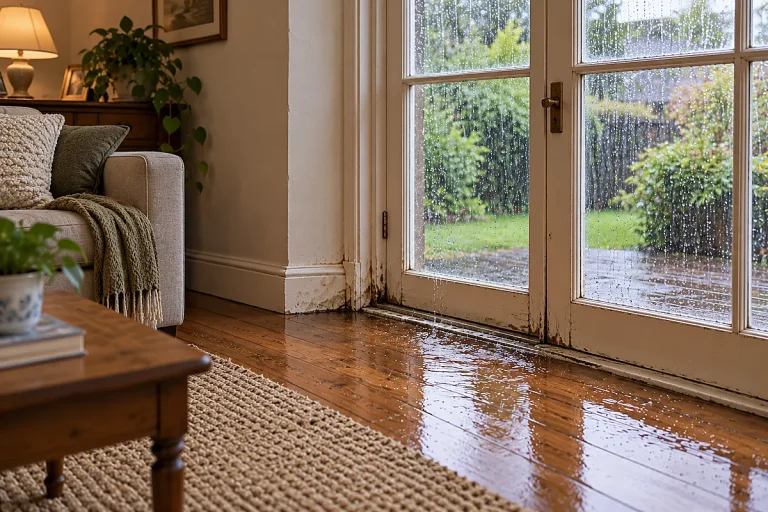
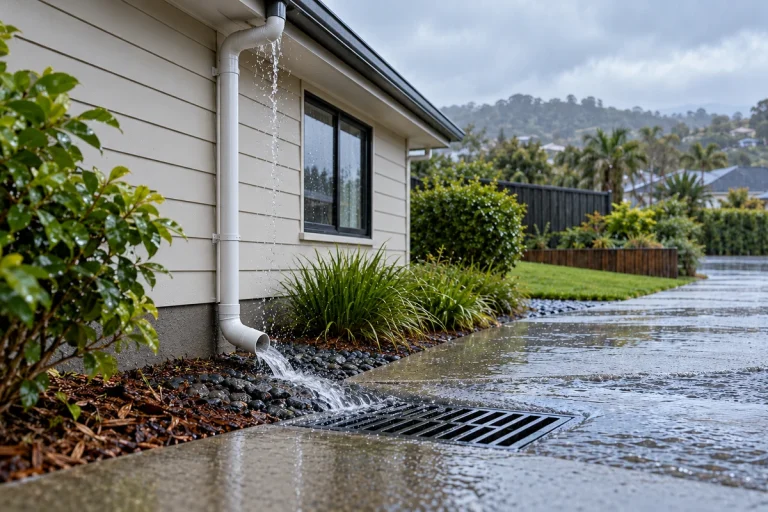
Dampness can enter from exposed ground beneath suspended timber floors, poorly managed site runoff or groundwater. Flooding introduces a different risk again, potentially affecting carpet underlay, cavities, insulation and electrical equipment. Where contaminated floodwater or sewage is involved, ordinary household cleaning may be inappropriate.
Moisture left after an earlier event
A leak can stop while the materials it wetted remain damp. Insulation, framing cavities and layered flooring can take much longer to dry than painted surfaces. Painting, wallpapering or laying new carpet before verifying the condition may trap the remaining problem or hide it until growth returns.
4. Assessing Seriousness and Urgency
Urgency depends on the extent of contamination, the condition of materials, whether moisture remains active and who may be exposed. A small cleanable patch and a water-damaged wall cavity should not receive the same treatment.
Lower concern: a limited, accessible surface patch
A small amount of visible mould on intact, washable tile or paint, with no material deterioration or active water entry, may be manageable through careful household cleaning and better moisture control. The test of success is whether it stays away when the area is kept dry, not whether a cleaner removes the colour temporarily.
Avoid assuming that a small patch is trivial where it recurs constantly, appears close to damaged material or is affecting someone particularly sensitive to exposure.
Moderate concern: recurring growth or several affected surfaces
Mould that reappears after cleaning, develops across multiple rooms, affects fabrics or accompanies persistent mustiness calls for a more systematic investigation. Poor extraction, cold surfaces and hidden wetting may all contribute. A building-focused assessment is usually more valuable at this point than repeated purchases of stronger cleaning products.
Higher concern: concealed damage, extensive growth or contamination
Substantial mould on plasterboard, damaged insulation, wet carpet underlay, flood-affected material or mould found within opened cavities may justify specialist remediation. Avoid opening further areas or disrupting the growth while awaiting a plan. Where sewage or other contaminated water was involved, separate health and hygiene precautions apply.
A commonly cited industry trigger is visible growth over about one square metre, but that is not a universal legal threshold in New Zealand. Material type, accessibility, vulnerability of occupants and the moisture source may justify professional help for smaller areas.
Occupant health and safety
People experiencing respiratory or allergic symptoms should seek advice from a healthcare professional. Asthma, immune suppression and other vulnerabilities can change the appropriate precautions. Buildings cannot be declared medically safe solely from the colour or species name of a mould sample.
If water is reaching wiring, an unstable ceiling is involved or structural materials appear to be failing, deal with those immediate hazards before attempting any mould removal.
5. What the Homeowner Should Investigate
The first investigation should establish the extent and pattern of growth without creating unnecessary exposure. Homeowners can collect useful observations, but testing, opening cavities and assessing serious material damage may require professionals.
Document the affected areas
Photograph each location in daylight and record its approximate size, surface type and condition. Note whether the area is merely discoloured or whether paint, wallpaper, plasterboard or timber is swollen or soft. Include a reference such as a ruler where doing so is safe. Compare photographs over time to establish whether growth is expanding or recurring.
Record timing and moisture conditions
When was the growth first noticed? Does it intensify during winter, after prolonged rain, following shower use or after a previous leak? Have occupants changed how the rooms are heated or ventilated? Did the problem follow new curtains, a wardrobe against the wall or a change in glazing?
A simple hygrometer can help compare room temperature and relative humidity at different times. Readings need interpretation: a comfortably warm room and a cold wall surface can still create local condensation. A moisture meter used by an inspector can help assess materials, but does not itself identify mould species or prove the location of a leak.
Inspect moisture controls safely
Check accessible bathroom and kitchen extractors, window operation and whether water accumulates on glass and sills. Look for blocked exterior vents and obvious roof-water or drainage defects from the ground. Record where the fan actually exhausts if the outlet is visible; do not climb into a hazardous roof space or disturb electrical installations to trace ducting yourself.
Consider whether furniture blocks airflow across vulnerable walls. A small clearance can help circulation, although it will not correct an external leak or a materially inadequate thermal envelope.
Distinguish surface growth from concealed wetting
An intact tile or washable window frame is different from crumbling plasterboard or a wall that repeatedly becomes damp after rain. If the substrate is damaged, ask whether the moisture source is external, internal or a condensation mechanism. An experienced surveyor may recommend targeted moisture readings, inspection of known leak paths or controlled exposure of a limited area.
Do not puncture, scrape or remove suspect linings casually. In buildings constructed or renovated before 2000, some products may contain asbestos. WorkSafe’s asbestos guidance is relevant before disturbing potentially affected materials.
Should mould be tested in a laboratory?
Visible growth and an identifiable moisture source often make species testing unnecessary for deciding to clean and repair. Laboratory identification can be useful where the question is genuinely technical, health advice requires further information, contamination is contested or an independent remediation specification requires it.
A surface sample may identify organisms present on one spot; it will not necessarily establish whether the wall behind is wet. Air sampling varies with airflow, weather, cleaning and occupation and should be interpreted by a competent assessor with an appropriate question in mind. A cheap settling-plate kit can grow environmental spores without demonstrating that a building is unsafe.
Ask what decision a proposed test would change before paying for it. A useful report should discuss the building’s moisture conditions, inspection limitations and recommended action rather than presenting a species name without context.
Review relevant property records
Previous inspection reports, insurance claims, moisture-test findings, council building files and invoices for repairs may help establish the history. For a rental property, records of extractor installations, insulation and Healthy Homes compliance can be relevant. Past records are a starting point, not proof that current conditions remain acceptable.
6. Available Solutions and Repair Pathways
Successful treatment usually has two distinct elements: removing or appropriately remediating affected material and correcting the conditions that allowed growth. The work should be matched to the surface, extent, water source and risks involved.
Option 1 — Clean small patches on suitable surfaces
Where a limited patch is on sound, washable material and there is no evidence of hidden damage, careful cleaning may be appropriate. BRANZ’s Level guidance describes washing ordinary surface mould using warm water and household detergent, rinsing and allowing the surface to dry thoroughly. Tenancy Services also gives practical advice for maintaining a dry home.
Wear suitable gloves, avoid splashing and use appropriate eye and respiratory protection for the task. Ventilate the work area. Use damp cleaning methods that physically remove contamination rather than dry brushing it into the air. Follow product-label directions if using a proprietary mould cleaner. Never mix cleaning chemicals; in particular, mixing bleach with ammonia or acids can release dangerous gases.
Some official guidance discusses dilute bleach solutions for certain cleanable surfaces, but bleach is not essential for every small patch and may damage finishes or fabrics. Do not apply products beyond their intended use or assume disinfecting a surface addresses moisture behind it. Stop and seek professional help if cleaning would disturb friable, damaged or extensive material.
Option 2 — Remove and replace material that cannot be cleaned adequately
Paper-faced plasterboard, carpet underlay, insulation, wallpaper and heavily affected soft furnishings can be difficult to clean through their full depth. Where contamination is embedded or materials have deteriorated, controlled removal may be more reliable than repeated spraying or repainting.
The scope should be based on investigation. Removal of a small damaged section can sometimes be sufficient, but opening a wall may reveal wider moisture damage. Contractors should protect adjacent rooms from contamination, handle waste appropriately, inspect remaining materials and verify that moisture has been controlled before reconstruction.
Clean, dry replacement material should not be installed over still-wet framing. Moisture-resistant finishes may be suitable in particular locations, but are not substitutes for correct waterproofing, extraction or ventilation.
Option 3 — Repair the water-entry or plumbing defect
Where mould results from rainwater penetration, leaking showers or pipe failures, correcting the defect is the central intervention. Depending on the evidence, that may involve a roofer, plumber, drainlayer or weathertightness specialist. Repairs can range from a local connection to substantial work on an external wall.
Affected building components must then be assessed for residual moisture or damage. A repaired pipe does not make contaminated insulation reusable, and a new window seal does not restore plasterboard that has deteriorated. Keep the source repair and reinstatement scopes distinct so neither is overlooked.
Option 4 — Improve moisture extraction and fresh-air provision
Bathrooms and kitchens need effective extraction where moisture is produced. A fan should be suitably sized for its installed duct, operate when required and discharge outdoors. A recirculating rangehood cannot be treated as equivalent to an externally ducted system for removing cooking vapour.
General ventilation also matters. Bedrooms and living areas need an appropriate supply of fresh air, especially in tighter homes. Opening windows when practical can help, but a persistently damp or difficult building may warrant a properly designed mechanical system. Ask how it removes moist air, where replacement air enters, its operating costs and whether the installed arrangement is suitable for the particular house.
Option 5 — Improve heating, insulation and cold-surface performance
Where growth repeatedly appears at thermal bridges, poorly insulated corners or cold window reveals, suitable insulation and heating improvements may reduce surface condensation. The priority should follow evidence: a defective extractor may justify attention before expensive glazing replacement, while inadequate heating can keep wall surfaces cold despite reasonable ventilation.
Wall insulation retrofits need building-specific assessment because concealed moisture and cladding arrangements matter. Better glazing can warm glass, but will not remove indoor humidity or repair leaks. An independent building-performance assessment may be worthwhile before several substantial upgrades are purchased together.
Option 6 — Dry the building following a leak or flood
Material that has absorbed liquid water may need controlled structural drying after the source has been stopped. A restoration contractor may use moisture mapping, extraction equipment, drying fans or dehumidifiers depending on the building and contamination. The correct approach differs for clean water, sewage and floodwater.
Drying without containment or an assessment of mould-affected material can spread contamination or leave damaged materials in place. The aim is to restore acceptable material conditions and verify that concealed spaces have not simply been covered over. Where structural elements are affected, separate building or engineering input may be needed.
Option 7 — Use professional mould remediation where warranted
Professional remediation is appropriate where growth is extensive, concealed, recurrent despite well-founded measures, associated with significant building damage or unsuitable for household cleaning. An experienced contractor should set out how the work area will be managed, how affected material will be removed, which protective measures will be used, and how completion will be assessed.
Depending on scope, work may require controlled containment, appropriate filtration, cleaning, material removal and post-work inspection. Chemical fogging, ozone or spraying alone should not be accepted as proof that embedded contamination and the moisture source have been corrected. Ask what physical removal and source repairs are included.
Choosing a combined approach
A mouldy bedroom may involve single glazing, inadequate heating and an ineffective extractor in a nearby bathroom. Another home may have good heating but a leaking wall junction. The first calls for managing humidity and surface temperature; the second requires building-defect investigation and repair. Several treatments may be needed, but only where the evidence supports each one.
7. Costs and Financial Considerations
Costs can be minimal for a small, accessible patch or substantial where water damage requires containment, removal of linings and reconstruction. The size of the visible patch is not a reliable estimate of the complete project cost.
Indicative New Zealand costs
The following amounts are broad budgeting allowances in NZ dollars, generally including GST unless specifically noted. They are not national average prices. Actual pricing depends on the contractor, materials, site access, contamination extent and documentation required.
| Work or investigation | Indicative planning allowance |
|---|---|
| Simple household cleaning supplies and protection | Approximately $30–$150 |
| Targeted general building or moisture inspection | Approximately $350–$900+ |
| Specialist mould-only or moisture assessment | Approximately $450–$1,400+ |
| Laboratory analysis of an individual surface sample | Approximately $170–$350+ |
| Professional cleaning of a small accessible area | Approximately $450–$1,200+ |
| Remediation involving several rooms or limited material removal | Approximately $1,000–$4,000+ |
| Extensive post-flood remediation and building reinstatement | Often several thousand to tens of thousands |
| Fixing underlying extraction, plumbing, drainage or building defects | Separately scoped; highly variable |
These ranges are deliberately approximate. For context, one NZ laboratory published on-site assessments at $800–$1,200 excluding GST in September 2026, and a remediation provider advertised small-job and multi-room pricing spanning several hundred to several thousand dollars. Those are examples of supplier pricing, not a national market survey.
Three separate parts of a realistic budget
For example, a bathroom with localised surface growth may need a modest cleaning job and fan servicing. In contrast, mould behind water-damaged plasterboard might involve a surveyor, a weathertightness repair, controlled removal of linings and subsequent stopping and repainting. Comparing only the cleaning charges would be misleading.
Why testing is not always the best first expense
Where a small patch is visibly growing because the bathroom extractor does not discharge outdoors, testing species may provide little practical benefit. The building defect and contaminated surface already require attention. Where the scope is disputed, a landlord and tenant disagree about the source, or a remediation contract needs verification, a properly designed independent assessment may be worth its cost.
Ask how the result will change the decision. Do not pay for repeated low-value tests while an active moisture source remains unattended.
Quotations, uncertainty and insurance
Request an itemised quotation covering inspection, containment where needed, removal, cleaning, disposal, drying, reinstatement and verification. Identify provisional sums for concealed damage. For complex jobs, ask who is responsible if additional affected material is found and whether a separate builder or licensed practitioner is required.
Home insurance may distinguish sudden insured events from gradual deterioration, maintenance problems and exclusions. Contact the insurer where a claim might apply, document the conditions and discuss the proposed scope before non-emergency demolition. A landlord or future buyer may also value clear inspection reports, invoices and evidence that the moisture cause has been addressed.
8. Legal, Regulatory and Consent Requirements
New Zealand does not have a single rule that sets a universal permissible area of household mould or mandates laboratory testing of every patch. Relevant obligations arise from building work requirements, tenancy law, health and safety duties and the actual nature of proposed repairs.
Building Code E3 and other relevant clauses
Building Code E3 — Internal Moisture requires building work to address conditions that can cause excessive internal moisture and fungal growth, with provisions concerning thermal resistance, temperature, ventilation and wet-area finishes. E2 — External Moisture concerns external water penetration and accumulation. G4 Ventilation, E1 Surface Water, H1 Energy Efficiency and B1 Structure or B2 Durability may be relevant depending on the work.
These are building-performance provisions, not a universal instruction to rebuild every older house to current new-home specifications because some mould appears. The applicable requirements depend on the project, existing building and consent pathway.
Healthy Homes requirements for rental properties
The Healthy Homes Standards establish minimum requirements for heating, insulation, ventilation, moisture ingress and drainage, and draught stopping, subject to exemptions. The ventilation standard generally includes opening-area requirements for habitable rooms and appropriate extraction in kitchens and bathrooms. The drainage standard includes effective stormwater disposal and, where required, a ground moisture barrier beneath an enclosed suspended floor.
Compliance with one individual standard does not guarantee that a rental has no mould or that no maintenance is required. Conversely, a visible patch does not automatically prove which standard has been breached. The cause, building condition and obligations should be assessed together.
Responsibilities of landlords and tenants
Tenancy Services’ mould and dampness guidance explains that rental homes should be free from mould and dampness before being rented, landlords must provide and maintain properties in a reasonable state of repair, and tenants need to keep the property reasonably clean and ventilated and promptly report problems needing attention.
The relevant responsibility depends on the cause. A leaking roof, defective extraction system or inadequate building maintenance cannot automatically be attributed to tenant behaviour. At the same time, routine cleaning and reasonable ventilation during occupation remain relevant tenant responsibilities. Photographs, written repair notifications, inspection records and professional reports can help resolve uncertainty.
Where problems remain unresolved, tenants and landlords may seek advice through Tenancy Services and use applicable dispute-resolution processes. Avoid assuming that mould-cleaning invoices alone establish legal responsibility.
Does mould remediation require building consent?
Cleaning sound exposed surfaces generally does not constitute work needing building consent. However, substantial rebuilding of external walls, structural timber repairs, altered waterproofing systems or work affecting fire separations can require consent or other approvals. Schedule 1 exemptions for certain repairs and maintenance have limits; exempt work still needs to comply with relevant Building Code requirements.
Before invasive remediation, ask whether linings conceal structural or weathertightness components, whether the building is a unit-title property and whether restricted building work rules apply. Use MBIE’s building-consent guidance to confirm the correct pathway for the proposed repair.
Asbestos, electrical work and worker safety
Building materials dating from before 2000 may contain asbestos. Cutting, sanding or stripping suspect linings during mould remediation can create a separate hazardous-material issue. Specialist identification and safe removal may be required under applicable WorkSafe guidance.
Electrical services affected by moisture require competent assessment; do not assume fittings become safe automatically when they dry. Contractors undertaking remediation have workplace health and safety obligations, including managing worker exposure and preventing contamination of adjoining occupied areas.
Contracts and keeping evidence
For residential building work costing $30,000 or more including GST, a written building contract and applicable pre-contract consumer documentation are required. Written scopes are worthwhile for smaller remediation work too. See MBIE’s residential building contracts guidance.
Keep condition photographs, moisture findings, sampling results where justified, repair records, product specifications, consent documentation and post-work verification. Such evidence is more useful than an unsupported assurance that the property has been made permanently ‘mould-free’.
9. Which Professionals May Be Required?
The appropriate professional depends on the extent of mould growth, the underlying moisture source and whether investigation, remediation or building repairs are required. Small areas of surface mould may be manageable without professional assistance, while recurring growth, concealed moisture damage or extensive contamination may justify specialist assessment.
A building surveyor or moisture investigator may be the appropriate starting point where the cause is uncertain, while a mould remediation specialist may be required for significant contamination. Other trades may then be needed to correct the moisture source or repair affected building materials. The professional who investigates the cause may differ from those carrying out the treatment and repairs.
Building surveyor or moisture investigator
An experienced residential building surveyor can assess potential water-entry paths, construction details, moisture readings and damage to materials. Independent investigation may be particularly valuable when earlier cleaning has failed or substantial building work is proposed.
Mould remediation specialist or occupational hygienist
A competent remediation contractor can scope containment, removal and cleaning. An occupational hygienist or suitably experienced independent assessor may help design testing and verification where contamination is extensive or disputed. Ask about relevant training, methods, reporting and the separation between assessment and commercial remediation recommendations.
Builder, roofer or weathertightness specialist
If the source is a failed roof, external wall or window detail, the building defect needs appropriate expertise. A builder may then repair linings or framing. Where restricted building work is involved, confirm applicable licensing and consent requirements.
Plumber, electrician or ventilation specialist
Engage appropriately authorised practitioners for leaking plumbing, electrical hazards or installation of extraction systems. A ventilation installer should explain actual extract performance and where air is discharged, not merely quote the fan’s nominal rating.
Questions to ask before appointing anyone
Ask what evidence supports the proposed source, what materials are affected, what remains uncertain and how the result will be verified. Clarify whether containment, disposal, reinstatement, moisture repairs and specialist documentation are included in the price.
10. Common Mistakes and Avoidable Risks
Many unsuccessful mould treatments remove the visible signs while leaving moisture conditions unchanged. Other approaches introduce avoidable safety or financial risks.
Painting or spraying over the visible patch
Paint and mould-inhibiting coatings cannot reliably correct a wet substrate, failed flashing or inadequate extraction. Surface discolouration may soon return, while concealed damage remains unexamined.
Assuming black colour identifies a hazardous species
Appearance alone cannot identify a fungus or determine an individual’s health risk. Concentrating on the label ‘black mould’ can distract from the extent of contamination, occupant vulnerability and actual water source.
Using unsafe cleaning methods
Dry brushing, sweeping contaminated dust, using unsuitable vacuum equipment or mixing chemicals can worsen exposure or cause injury. Follow suitable protective and cleaning guidance, and use specialists when the material or scale makes ordinary cleaning inappropriate.
Paying for repeated tests without fixing moisture
A laboratory result may be useful for a defined question, but repeated sampling does not stop a leak or make cold surfaces warm. Determine what the test is intended to change before commissioning it.
Removing linings without planning the work
Opening a mould-affected cavity can spread contamination and disturb asbestos-containing products or electrical services. A controlled scope with appropriate safety checks should precede invasive investigation.
Rebuilding before affected materials are dry
New plasterboard, carpet or cabinetry can hide residual wetting. Agree how the source repair, material condition and satisfactory drying will be established before reinstatement.
Buying one product as a whole-house cure
Fogging, dehumidifiers, a new fan or double glazing may each have a legitimate role but cannot solve every cause of mould. Match the expenditure to the documented condition and ask what evidence will demonstrate success.
11. Making an Informed Decision
The best response depends on how extensive the growth is, whether it is on cleanable material, why the area is damp and whether hidden damage or health-related vulnerability changes the risk. The following scenarios illustrate the differences.
Scenario A — Small mould patches on a bathroom ceiling
A bathroom develops scattered speckles each winter. The painted ceiling is sound, but the extractor is poorly ducted and humidity remains high long after showers. Careful cleaning may address the surface growth; a properly performing fan and appropriate room use address the conditions that allow it to return. Wholesale wall replacement is unlikely to be justified without additional evidence.
Scenario B — Dark patches behind a bedroom wardrobe
Mould appears on an external wall behind furniture, with no clear association with rainfall. The wall is cold and air movement is restricted. Investigation should consider heating, humidity, insulation and furniture clearance. If moisture readings or other evidence suggest concealed penetration, broaden the assessment rather than assuming condensation alone.
Scenario C — Recurring mould beside a window after rain
A patch repeatedly reappears beside a window reveal, and the plasterboard has softened. The symptoms correlate with wind-driven rain. A building surveyor investigates the junction and identifies water entry. Repairing the weatherproofing and replacing damaged material takes priority over buying a stronger mould spray.
Scenario D — Mould discovered after a house flood
Floodwater has affected carpets, skirtings and lower wall linings. A restoration specialist establishes the contamination level, moisture extent and materials that require removal. The owner should not assume that surface cleaning alone makes affected underlay or wall cavities suitable for retention.
Scenario E — Mould complaint in a rental home
A tenant reports recurring mould in several rooms and provides dated photographs. The landlord arranges investigation of heating, extraction and possible leaks, while the parties record routine cleaning and ventilation arrangements. Responsibilities should follow the actual cause and tenancy obligations, not an assumption that every problem results from occupant behaviour.
A practical decision framework
Before committing to a treatment, ask:
- Source: What keeps the affected material sufficiently damp for growth?
- Extent: Is this cleanable surface mould or potentially concealed contamination?
- Risk: Are vulnerable occupants, electrical hazards or damaged materials involved?
- Investigation: Would specialist assessment change the scope of work?
- Method: Does the proposal physically remove contamination where needed?
- Repair: Is the moisture source being addressed by the right trade?
- Cost and compliance: Are exclusions, approvals and reinstatement clear?
- Verification: How will drying, cleaning and future performance be checked?
The objective is not to guarantee that a house contains no naturally occurring spores. It is to remove problematic growth, manage moisture and provide a maintainable indoor environment.
12. Your Recommended Next Steps
The following sequence provides a practical homeowner pathway from discovery to a completed, documented response.
Your Mould Problems Action Plan
Step 1 — Identify immediate hazards.
Keep clear of contaminated floodwater, unstable materials and moisture affecting electrical fittings. Avoid disturbing extensive growth or suspected asbestos-containing products.
Step 2 — Document the problem.
Photograph locations, record the scale of visible growth and note any damage, musty odours or recurring patterns.
Step 3 — Look for the moisture source.
Consider extraction, condensation, plumbing, exterior water entry and ground moisture; do not assume the first plausible explanation is confirmed.
Step 4 — Decide whether household cleaning is appropriate.
Limit ordinary cleaning to small, accessible patches on suitable sound materials, using appropriate protection and methods.
Step 5 — Arrange professional assessment where necessary.
Seek professional assessment for recurring or extensive mould, suspected concealed contamination, deteriorating building materials or an uncertain moisture source. A building surveyor or moisture investigator may be appropriate where the cause is unclear, while a mould remediation specialist may be needed for significant contamination. Where leaking plumbing, defective roofing or inadequate ventilation is identified, engage the relevant trade to correct the underlying problem before completing repairs or reinstatement.
Step 6 — Obtain an itemised treatment and repair scope.
Distinguish removal, drying, source repairs, replacement materials and optional improvements. Confirm any consent or licensing requirements.
Step 7 — Complete and verify the work.
Check that affected materials have been appropriately managed and the underlying moisture defect corrected before reinstatement.
Step 8 — Retain records and monitor conditions.
Keep reports, invoices, photographs and specifications. Review the area during comparable weather and investigate any recurrence promptly.
Final consideration
Mould should not be treated as a cosmetic problem alone, nor should every small patch prompt expensive laboratory testing or major building work. What matters is whether moisture is persistent, which materials are affected and whether the proposed response corrects the cause as well as the visible growth.
A clear diagnosis, safe removal and durable moisture management protect both the condition of the house and the wellbeing of the people living in it. They also help homeowners spend money on the repairs that are genuinely necessary.